


My attempt at Graduate-level Writing

Hey folks. Below is an academic essay I wrote in 2022 for my documentary class. I had a fun time writing this and my analytical, theoretical brain was having a heyday with this. Also, not to flex but I had two of my professors read this, and they said it was graduate-level writing, I was an undergrad at the time soooo....
Anywho, here's an academic essay diving into the debate of the non-fictionness of documentary, is it all reality or no? With some emphasis on film movements, particularly the French New Wave and elements of Italian Neorealism. Lmk what you think, maybe I still have a shot at grad school?! Also, pretend that this is all still in the MLA Word Doc format ok?
The Convergence of Fiction and Reality
By Sydney Harrison
This essay explores how fiction can intersect with nonfiction by using the French New Wave as a case study. This essay demonstrates how historical, philosophical, and stylistic influences have created a non-fictional strain within the larger fictional works of the New Wave. This essay also analyzes the movement through Erik Barnouw and Bill Nichol’s documentary texts to further emphasize the non-fictional element within the movement. The terms documentary and non- fiction are used interchangeably.
Key words: New Wave, Fiction, Reality, Documentary, François Truffaut
I
Introduction
The renowned New Wave director François Truffaut once said: “I still ask myself the question that has tormented me since I was thirty years old: Is cinema more important than life?” (Douchet 16). Where real life ends, and the fictional construct of the cinema begins isn’t as clear- cut as it may seem to be. Just as one is convinced of the artifice of it all, a film will do something so uncharacteristically real, so human, that one can almost forget its artificiality. It may be for this and other reasons (i.e., the collective unconscious theory) that so many conventions are so quickly and easily understood––the family unit, a protagonist with a dream, and so forth. It can be insightful to consider how this nonfictional element may have come to be. Could historical precedent play a role? Could philosophical thought have a role to play as well? How might these affect style and rhetoric?
A movement that provides insight into these ideas is the New Wave itself. Its paradoxical disconnection and connection to precedence, its fascination with the medium, and so forth offer interesting implications to the convergence of fiction and reality. To discover the nonfiction element of fiction film, a focus will be given to the historical precursors, philosophical traditions, style, and films from the New Wave. The movement will also be examined in the light of the Erik Barnouw and Bill Nichols texts Documentary: A History of the Non-FictionFilm and Introduction to Documentary, to elaborate the nonfictional roots of the New Wave movement.
Philosophical Foundations and Historical Precursors
At the heart of the New Wave stood a group of young directors, who were firm in their convictions and sure of what was needed to make films that were true to reality. These convictions came in opposition to what was labeled the ‘tradition of quality’. What New Wavers so opposed in this tradition was “the slickness and technical virtuosity of this [style] as well as its literary origins” (Vincendeau 350). One of the most vocal against it was François Truffaut who spoke against films of the tradition by saying that their “theme[s] of profanation and blasphemy, [and] dialogues with double meanings, [that] turn up here and there...prove to me...that they know the art of ‘cheating the producer’” (Truffaut 4). This suggests a frustration with the escapist tendencies of the ‘tradition of quality’ as well as its lack of interaction with reality. But what prompted such vehement feelings against this style? What could have helped influence Truffaut’s thought process? A look at some philosophical traditions and important historical figures might help answer these questions.
André Bazin
Noted for being one of the most important French film theoreticians of all time, André Bazin has been credited not only with co-founding the magazine La Cahiers du Cinema but with influencing the noted New Wave directors that would come to define the movement. A key philosophical tradition that influenced Bazin’s convictions, as well as the future New Waver convictions, was that of existentialism. This philosophy holds to an “ethical theory that we ought to treat the freedom at the core of human existence as intrinsically valuable and the foundation of all other values” (Webber 2). Indeed, when thinking about existentialism in relation to the New Wave it can be important to remember that “the idea of personal authenticity is at the center of existential thought” (Khawaja 24). Perhaps the lack of authenticity is part of what drew so much of Truffaut’s ire towards the ‘tradition of quality’. Bazin seems to reinforce this idea in his essay “Ontology of the Photographic Image” which espouses the “philosophical heart of the [future New Wave as] the relationship of cinema to reality” (Greene 19). This idea is essential. It suggests a need for non-fictional components in the cinema to provide the authenticity needed to link them to real life. Furthermore, Bazin’s firmly held belief that “the camera is able....to make reality reveal itself” in how “the object is...transformed by virtue of being photographed” reveals, even more, the non-fictional aspect of the future New Wave as well as Bazin’s ontological philosophy (Greene 20). This belief in the objectivity of the camera and of its ability to reveal hidden truth would come to influence figures like Jean Rouch and with him the Cinema Verité movement. It would also provide the philosophical foundations for many of the New Wave’s stylistic considerations and beliefs. Despite some disagreements between ideas held by Bazin and the New Wave directors, it cannot be denied the foundational influence that his philosophical beliefs hold on the New Wavers.
Jean Rouch
When thinking of the precursors of the New Wave movement, Jean Rouch holds a prominent influence and role. His style is marked by a Bazinian influence and a dedication to reality. His films show a “desire to embrace the real, [and to] challenge existing genres and categories including the dividing line between fiction and documentary” (Greene 37). This reflects a neorealist influence at its center, which will be discussed later. What perhaps reveals Rouch’s most profound influence on the New Wave movement can be found in his adamant declaration that “there is almost no boundary between documentary film and films of fiction. The cinema, the art of the double, is already the transition from the real world to the imaginary world” (Greene 38). This not only echoes Bazin’s reflections but also highlights the foundations of what would be known as the Cinema Verité movement.
Style
Italian Neorealism
A problem that has been prevalent in all early film history is the challenges imposed by
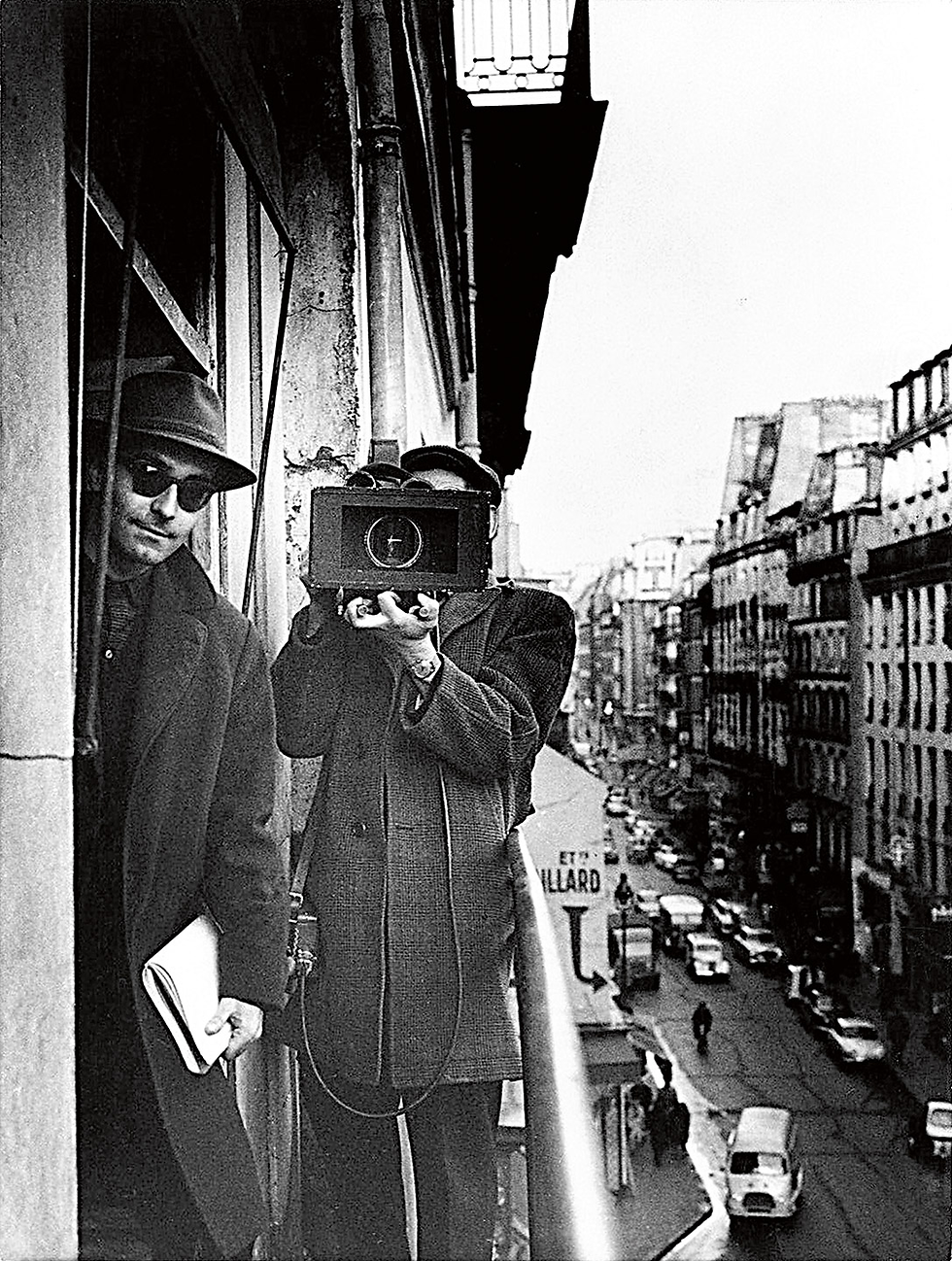
a nearly immobile camera. This hindrance naturally led to efforts to create lightweight cameras like the Coutant, the Arriflex, and the Cameflex (see Douchet 204). The effect of these lightweight cameras was astounding. Indeed, “a new intimacy developed between the camera and its subjects”(Douchet 204). This intimacy was first noted in the ItalianNeorealism movement. It would become the first precursor of the New Wave style. This can be seen in how the NewWave adopted a “neo-realist aesthetic.... marked by shooting on location and the use of natural light, by the absence of stars, and by the rejection of carefully crafted narrative in favor of a loose storyline” (Greene 22). These stylistic foundations would eventually help to provide the New Wave with the documentarial true-to-reality dedication so pronounced by Bazin, Rouch, and eventually Truffaut.
Cinema Verité
Where the Cinema Verité movement ends, and the New Wave starts is often unclear. Indeed, Rouch’s influence extended to his participation in the movement. So, in a way, it can almost be said that the Cinema Verité and the New Wave movements are nearly one and the same. What sets them apart is that Cinema Verité leans more towards documentary and the

New Wave more toward fiction, though you can find both strains of fiction and non-fiction in both movements. One of the New Wave’s major takeaways from the Cinema Verité movement included more interaction between the filmmaker and the subject. This can be seen in many instances of protagonists acknowledging the camera and talking to it, almost like an interview. The opening scene of Godard’s Breathless (1960), is a case in point. Other takeaways from Cinema Verité matched that of what was taken from the Neorealist movement including the natural lighting, non-professional actors, and hand-held cameras (see Greene 40).
Of Note
Other parts of the New Wave style that seem to differ from what it took from the Italian Neorealism and Cinema Verité movements include a fascination with the medium of film itself and a deep love for films in general. This meant that New Wave films were usually “filled with allusions to other films [and] homages to beloved directors” as well as a deep “self-reflexivity [and] alliance of what Godard called ‘art and the theory of art’” (Greene 13). The reference to other films highlights the cinephile within all the young New Wave directors. This brings in a flavor of fiction in the characters or elements emulated in homage to the films they love. It also brings an element of documentary to these films through the self-awareness it adds in its reference to cinematic films likely seen by many of its viewers. What’s more this ‘self- reflexivity’ brings another dimension of awareness that provides another non-fictional strain within the movement. It’s an awareness of their films acknowledging themselves. This can be seen in the editing techniques which lacked some continuity but at the same time reminded the viewer that they were watching a film or in other words, a construct of human fabrication or invention. This component is essential because it brings in a technological perspective that provides a different dimension to non-fiction and brings with it an acute awareness of something else going on behind what one sees on the screen.
Nichols and Barnouw Texts
Barnouw
Barnouw’s discussion of the catalyst role that a documentariancan take seems to have implications for the New Wave. His discussion of Rouch’s Cinema Verité and how its goal was to “often [be] an avowed participant” in the filmmaking process, bears weight in the New Wave (Barnouw 255). The self-awareness of the style in acknowledging the camera at times and in reminding the viewer of the medium through freeze frames

or fast-paced editing suggests amore participative style. This creates an active engagement with the medium which pushes back against that ‘tradition of quality’ that the movement so heartedly rejected. Indeed, the need for more of an active role taken by the director as an auteur seemed paramount to the medium. This is evident in Truffaut’s statement that “[he] consider[s] an adaptation of value only when written by a man of the cinema” (Truffaut 4). The importance of an individualized and authorial mark on a film suggests the active involvement so prevalent in the Verité style. On top of this, the New Wave’s overall role in actively rejecting the style of the ‘tradition of quality’ seems like a catalyst in and of itself. This is evidenced by how quickly the Young Turks went from writing about films to making them. Their active role in creating the films that they thought were more important sped up the process much faster than their writing of it did.
Nichols
In terms of the Nichols text, the movement seemed to also emulate both the reflexive and participatory modes. In terms of the reflexive mode, the New Wave films, like reflexive documentaries, “ask us to see [films] for what [they are]: a construct or representation” (Nichols 125). This is evidenced by the self-awareness of the movement in the editing styles, use of freeze frames, and so forth. In terms of the participatory mode, there is an overall suggestion of “a form of interaction that would not exist were it not for the camera” (Nichols 143). This was seen in the acknowledgment and interaction with the camera so prevalent in

this movement. This movement also engages with the issue of defining what documentary is. As discussed in chapter one of his book, Nichol’s highlighted three common assumptions that arise when defining documentaries: “Documentaries are about reality; they’re about something that’s actually happened”, “Documentaries are about real people”, and “Documentaries tell stories about what happens in the real world” (Nichols 5-10). In the spirit of the ‘creative treatment of actuality’, it can potentially be argued that all three of these assumptions apply to the New Wave. They were filmed on location with real people who usually weren’t actors, which contributes to their films being about reality and real people. Finally, they use narrative to highlight things that can happen in the real world. If left to this strain of logic it would be easy to assume that New Wave films are mostly non-fictional. However, it’s important to consider the amount of directorial manipulation that has gone into these films which contributes to an overall fictional image. It can be important to remember though that the “documentary is not a reproduction; it is a representation” (Nichols 9). Thus, it may effectively be argued that New Wave films may just be a way of representing the world rather than reproducing it.
The 400 Blows (1959) and Breathless (1960)
Films that exemplify the New Wave are François Truffaut’s The 400 Blows (1959) and Jean-Luc Godard's Breathless (1960). Both have important strains of the non-fictional element indicative of the style. In terms of both the Neorealist and Verité influence, both
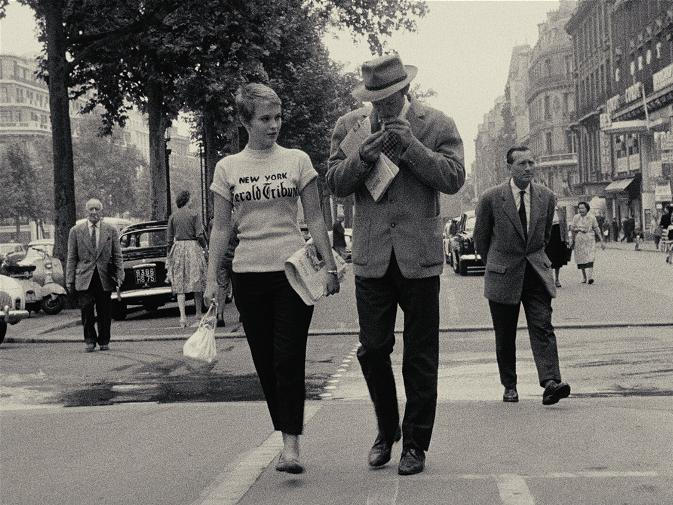
involve sequences that indicate the use of light-weight cameras. This can be seen in the opening sequence of The 400 Blows with the tracking shot of the city. The shakiness of the footage helped bring in a documentarial element by pushing back against the ‘tradition of quality’. This addition of imperfection brought more reality to the picture hinting towards more of a home video kind of style. In Breathless this can be seen in the shots that seem to follow Michel and Patricia as they walk back and forth while Patricia tries to sell the New York Harold Tribune near the beginning of the film. The realism found in the shakiness of the shot hints towards a documentarial strain that pushes back against the
typical fiction film which tries to create nearly invisible camera movement in sequences when two characters converse. Both films also bring forth an emulation and love of film. This can be seen in Michel’s imitation of Humphrey Bogart in Breathless and in the genuine joy of Antoine and his family when they go to the movies. These both hint towards the role of the auteur taken on by both directors. For Godard, it suggests a love of film culture, whereas for Truffaut it suggests a more autobiographical strain hinting towards his love of film and experiences with it. This personal imprint by both directors suggests another element of non-fiction as seen in the layer of subjectivity placed upon both films because of authorial control. Another important element that these films drew from the Verité is their use of the interview. In Breathless this can be seen in Michel’s interaction with the camera near the beginning of the film. It can also be seen in the interview Antoine has near the end of The 400 Blows. This further brings another component of non-fictionality to the film by providing insight into the protagonist's lives and opinions, much like the talking heads in a

documentary would. Finally, both films show a self- awareness of the medium. This can be seen in the fast-paced and slightly discontinuous editing of Breathless and in the freeze-frame that concludes The 400 Blows. This awareness rejects the worldbuilding of fiction film andinstead suggests a realization of the artificialcircumstances by reminding the viewer thatthey are watching a film. This brings forth moreof a non-fictional element by suggesting that the films aren’t lying about what they are and that they are wearing what they are on their sleeve, rather than trying to hide behind invisible editing or sleek camera quality.
Conclusion
Overall, it may not be clear where the line is that divides fact from fiction, but in quite a literal sense, one can’t exist without the other. For example, the fact of technology provides for the fictional worlds created by that technology, as seen in the New Wave films self-reflexive awareness. In a Cinema Verité and Bazinian sense, what exists in front of the camera is a truth that wouldn’t exist without the camera there. Thus, in a sense, it may never be totally clear whether films in the New Wave contain wholly fact or wholly fiction. I believe the strength and legacy of the New Wave endure precisely in its reliance upon both non-fiction and fiction. The non-fictional strain in the medium brings a sense of reality and relatability to the movement that makes it so appealing today. The fictional strain within it provides for the entertainment and creativity so prevalent and admired within these films. Furthermore, the influence of precedence on the New Wave, and its ability to utilize that precedence to make something of its own, highlights the important role that creativity can take when synthesizing what one has learned. Indeed, the New Wave may be one of the prime examples of combining both fiction and non- fiction to create a whole that speaks for itself and invites its viewers to think critically and question everything.
Works Cited
Barnouw, Erik. “Documentary: A History of the Non-Fiction Film.” Oxford University Press. 1993.
Breathless. Directed by Jean-Luc Godard. Les films Impéria, 1960.
Douchet, Jean. "French New Wave." Distributed Art Publishers. 1999.
Greene, Naomi. "The French New Wave: A New Look", Wallflower Press, Dec. 2017. Khawaja, Noreen. “The Religion of Existence: Asceticism in Philosophy from Kierkegaard to
Sartre”, University of Chicago Press. 2016.
Nichols, Bill. “Introduction to Documentary.” Indiana University Press, 2017.
The 400 Blows. Directed by François Truffaut. Les Film Du Carrosse, 1959. Truffaut, François. “A Certain Tendency of French Cinema.” Cahiers du Cinema,
MOVEMENTS/FrenchNewWave/Acertain_tendency_tr%23540A3.pdf
Vincendeau, Ginette. “The Popular Art of French Cinema.” The Oxford History of World Cinema, edited by Geoffrey Nowell-Smith. Oxford University Press, 1999, pp 344-353.
Webber, Jonathan. “Rethinking Existentialism”, Oxford University Press, 2018.
Ok ok here's proof of MLA-ish formatting!

Comments